


.png.2601211147522.webp)
Jet Ski Accident Lawyer Insights
Find Out Who’s Liable: Operator, Owner, Rental Company, or Manufacturer
Jet Ski Accident Cases Require Specialized Legal Experience
Jet ski accident litigation involves a complex overlap of negligence law, product liability principles, maritime concepts, and state boating regulations. These cases are fact-intensive and often require accident reconstruction, mechanical analysis, and expert testimony.
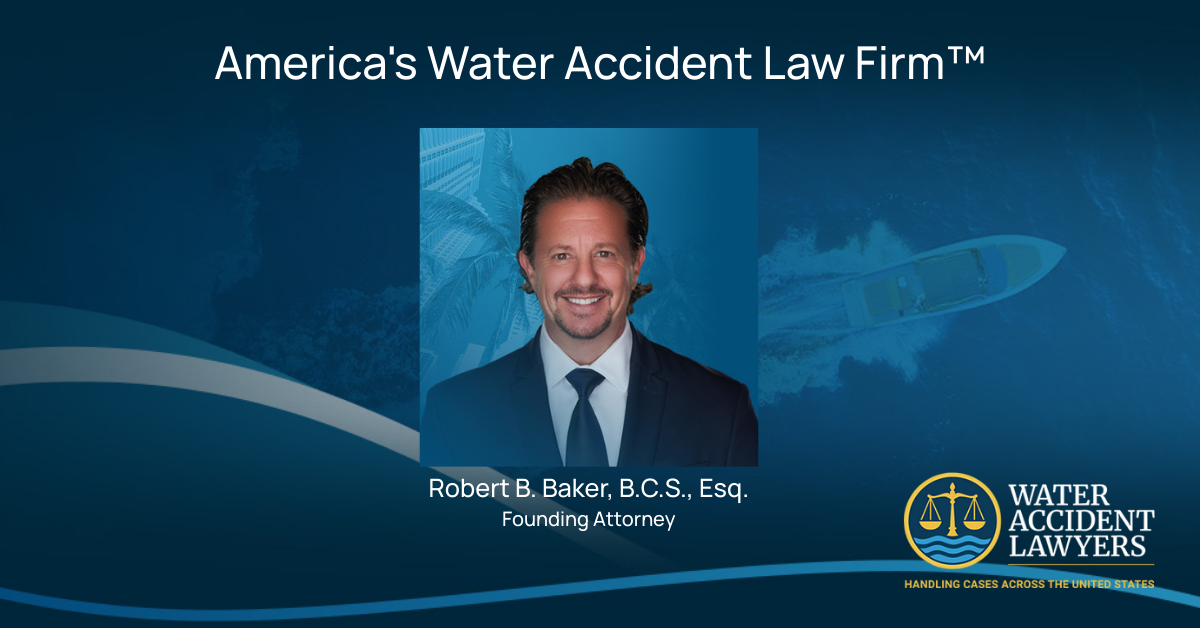
Robert B. Baker, Esq., founder of Water Accident Lawyers, is a Florida Board Certified Civil Trial Lawyer who has recovered in excess of $400 million on behalf of injured victims, including those seriously harmed in jet ski and watercraft accidents. His experience demonstrates that jet ski cases are rarely simple and that liability is often broader than insurance carriers initially claim. His practice is limited exclusively to catastrophic injury and death cases on the water.
OUR TRACK RECORD
We have successfully litigated cases against p.w.c. manufacturers under various theories of liability including design defects and warnings defects. We have held both Yamaha and Bombardier accountable for a design defect called "off-throttle steering." This is actually a misnomer because the crafts as designed and manufactured lacked the capability to turn when the operator was accelerating and released the throttle. Ultimately we prevailed in a products liability case against Yamaha resulting in a 39 million dollar jury verdict based upon this defect. Our hard work has led to all manufacturers redesigning their products to remove this inherent design defect.
We have also successfully litigated cases against all major manufacturers for an inherent design defect wherein women have sustained orifice injuries as a result of being ejected during acceleration and being exposed to tremendous water pressure entered into their body cavities. These cases have resulted in confidential settlements and warnings changes regarding this latent and inherent defect across the industry.
If you or a loved one was injured on a jet ski, do not assume it’s “just an accident.”
Who Is Liable in a Jet Ski Accident?
Owner, Operator, Rental Company, and Manufacturer Liability Explained
Jet ski accidents frequently result in catastrophic injuries, including traumatic brain injuries, spinal cord damage, fractures, amputations, and drowning. Despite the seriousness of these incidents, liability is often misunderstood and aggressively disputed by insurance companies.
Unlike automobile accidents, jet ski crashes often involve multiple layers of legal responsibility. The party operating the jet ski is not always the only—or even the primary—party at fault. In many cases, limiting a claim to the operator alone results in significantly reduced compensation or no recovery at all.
Determining liability requires a careful investigation into who operated the jet ski, who owned it, who put it into service, and whether the watercraft itself was defective.
This article explains how liability is determined in jet ski accident cases and why identifying every responsible party is essential to achieving full compensation.
Jet ski crashes often involve multiple liable parties—not just the rider. Rental companies cut corners. Owners hand over unsafe watercraft. Manufacturers ship defective components.
Why Jet Ski Cases Are Different
Most injury firms treat jet ski crashes like car accidents. That’s a mistake.
Jet ski liability can involve:
Operator negligence (speeding, reckless turns, failure to keep lookout)
Owner negligence (negligent entrustment, poor maintenance)
Rental company negligence (no training, unsafe equipment, bad screening)
Manufacturer defects (design/manufacture failure, inadequate warnings)
If you pursue the wrong defendant, you leave money on the table.
Our job is to identify all liable parties and pursue maximum recovery.
Who May Be Liable in Your Jet Ski Accident
1) The Operator (Most Common)
Operators are often liable for:
Excessive speed / unsafe maneuvers
Following too closely / jumping wakes near others
Inattention / failure to keep lookout
Boating under the influence
Ignoring no-wake zones or local rules
2) The Owner (Even If They Weren’t Riding)
Owners can be liable when they:
Let an intoxicated or inexperienced person operate
Hand the jet ski to an underage rider
Ignore known mechanical issues
Fail to maintain steering/throttle/safety equipment
This is often called negligent entrustment—and it’s a major source of recovery in jet ski injury cases.
3) The Rental Company (Often the Biggest Target)
Rental companies frequently try to hide behind waivers. Waivers are not a shield for negligence.
A rental company may be liable for:
Rushing or skipping safety instruction
Renting to visibly intoxicated riders
Failing to verify qualifications/age
Poor maintenance or inadequate inspections
Disabling safety systems / broken kill switches
Sending customers into hazardous areas
If you were injured on a rented jet ski, the rental company may be the strongest claim.
4) The Manufacturers — Bombardier, Yamaha, Kawasaki, Honda, Polaris
If the jet ski failed mechanically, liability may involve:
Design Defects
Inherently unstable designs
Dangerous steering systems
Inadequate braking capability
Poor visibility or ergonomics
Manufacturing Defects
Improperly assembled components
Faulty cables, hoses, or welds
Defective parts that deviate from intended design
Failure to warn (non-obvious hazards, inadequate instructions)
Inadequate warnings about known hazards
Failure to disclose non-obvious dangers
These cases often require engineers, accident reconstructionists, and rapid evidence preservation.
Insufficient operating instructions
Important: evidence preservation matters. Rentals get repaired and re-rented quickly.
Multiple Parties May Share Liability
In many jet ski accidents, liability is divided among several defendants. For example:
A rental company fails to train a rider
An owner ignores known mechanical problems
An operator rides recklessly
A design defect worsens the crash
Under comparative fault principles, each may bear responsibility. Failing to identify all responsible parties often means failing to obtain full compensation.
Depending on injury severity, your case may include compensation for:
Medical bills (past + future)
Surgery, rehab, physical therapy
Lost income and reduced earning capacity
Pain, suffering, loss of enjoyment of life
Scarring/disfigurement
Long-term disability and care needs
Wrongful death damages (if applicable)
What To Do Right Now (This Protects Your Case)
Jet ski cases are evidence-driven. Do these immediately:
Get medical care (and document symptoms)
Report the accident to authorities/marina
Photograph the jet ski, injuries, and location
Get witness names and numbers
Do not give a recorded statement to an insurer
Save rental paperwork, waiver, receipts, texts
Ask about surveillance footage (marina/docks)
Evidence disappears fast. Rentals are reissued. Footage is overwritten.
How the Process Works (Simple)
Free case review (10–15 minutes)
Liability investigation (identify all responsible parties)
Evidence preservation (letters, records, footage requests)
Claim building (medical proof, damages, experts if needed)
Negotiation or lawsuit (pursue maximum recovery)
FAQ
Does a waiver prevent me from suing?
Not necessarily. Many waivers do not protect against negligence, gross negligence, or defective equipment.
What if I was a passenger?
Passengers often have strong claims—especially if thrown off or struck.
What if the operator was my friend or family?
You may still have a claim through insurance or other responsible parties (owner/rental/manufacturer).
What if I wasn’t wearing a life jacket?
You may still have a claim. Comparative fault rules vary, but lack of a life jacket does not automatically bar recovery.
How long do I have to file?
Deadlines vary by state and may depend on where the accident occurred. The safe move is to act immediately.
Conclusion: Liability Is Fact-Driven—and Experience Matters
Jet ski accidents are not “freak accidents.” They are often the result of negligence, unsafe business practices, or defective products.
Determining who is liable—operator, owner, rental company, manufacturer, or all of them—requires experience, resources, and trial-level judgment.
Identifying the right defendants is the difference between a partial recovery and full justice.
You Only Get One Shot to Pursue the Right Defendants.
Get a free liability review to determine whether the operator, owner, rental company, manufacturer—or all of them—can be held responsible.
We will provide a confidential, no cost case review. Let us know if we can help.