



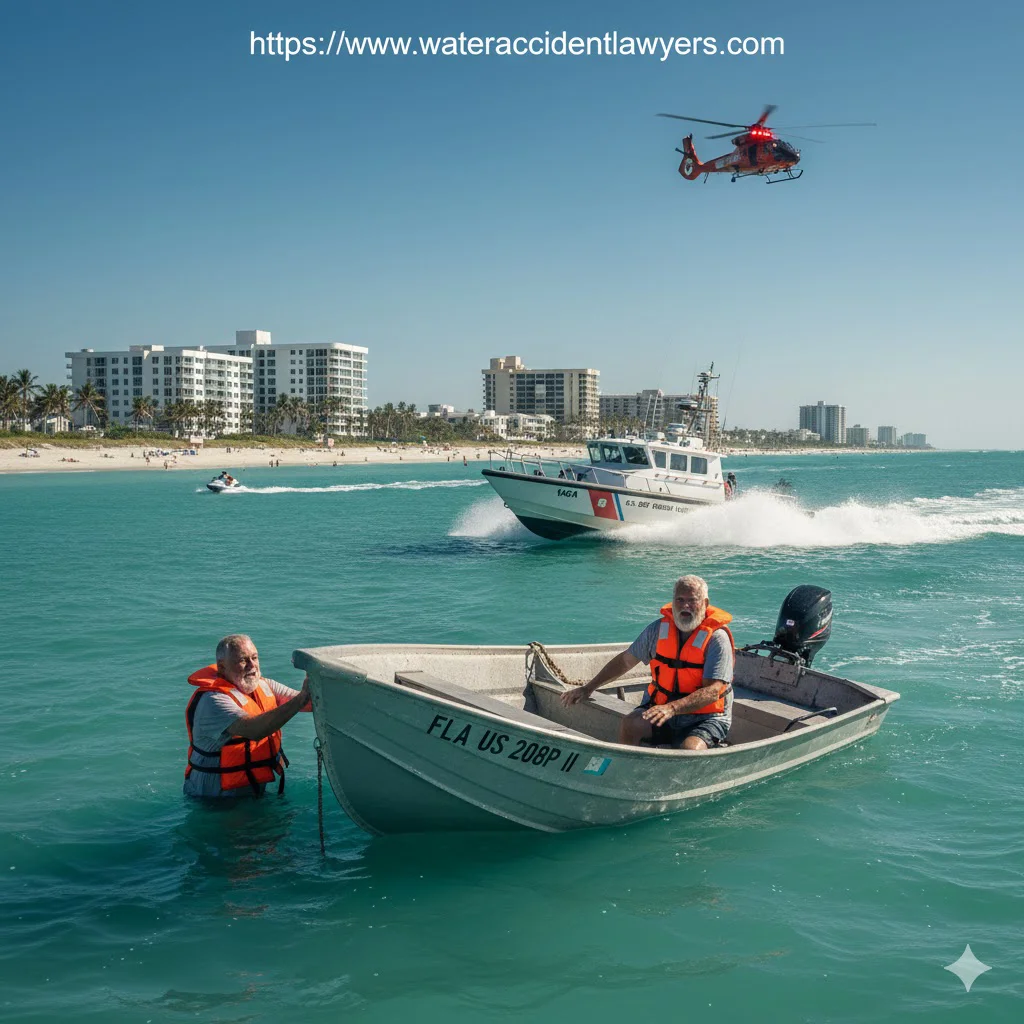
A Comprehensive Guide to Texas Maritime Law: Navigating Accidents on the Gulf and Great Lakes of Texas in Boating Accidents, Cruise Ship Accidents, and Jet Ski Accidents
Introduction
Texas, with its sprawling Gulf Coast and an abundance of major inland lakes like Lake Travis, Lake Conroe, and Lake Lewisville, is a haven for recreational boating. However, this popularity also leads to a significant number of boating accidents each year. Navigating the legal aftermath of a marine incident in the Lone Star State involves a complex interplay of the Texas Parks and Wildlife Code, general personal injury law, and sometimes even federal maritime statutes. For victims, understanding these unique legal frameworks is paramount to securing fair compensation and justice.
Texas Parks and Wildlife Code § 31.104: The Duty to Render Aid and Report
At the core of Texas boating accident law is the explicit "Duty to Render Aid" outlined in the Texas Parks and Wildlife Code. This statute places clear obligations on any vessel operator involved in a collision:
Stop Immediately: The operator must stop their vessel at or near the scene of the accident.
Offer Assistance: The operator is legally required to provide reasonable assistance to any person injured or otherwise affected by the accident, provided doing so does not seriously endanger their own vessel, crew, or passengers. This aid can include helping someone out of the water, providing first aid, or transporting them to safety if medically necessary.
Provide Identification: The operator must give their name, address, and the identification of their vessel to any injured person, as well as to the operator of any other vessel involved.
Reporting Requirements: In addition to rendering aid, Texas law mandates specific reporting timelines to the Texas Parks and Wildlife Department (TPWD):
Within 48 Hours: This urgent deadline applies to accidents involving a death, a disappearance from the vessel, or an injury that requires medical treatment beyond immediate first aid (e.g., hospitalization, sutures, or sustained medical care).
Within 30 Days: For accidents where property damage exceeds $2,000. This threshold ensures that even significant material losses are properly documented.
Failure to adhere to these reporting deadlines can result in fines and may complicate any subsequent personal injury claim. Fleeing the scene of a boating accident involving serious injury or death is a criminal offense, often charged as a felony under Texas law, carrying severe penalties.
The "51% Bar Rule" in Texas: Modified Comparative Fault
Texas operates under a "modified comparative fault" system, often referred to as the "51% Bar Rule." This principle is critical for any boating accident victim to understand, as it directly impacts your ability to recover damages:
Damage Reduction: If you are found to be partially at fault for the accident, your total compensation will be reduced by your percentage of fault. For example, if a court determines your total damages are $100,000, but you were 25% at fault (perhaps for not having proper lighting at dusk or for standing in a dangerous area of the boat), your recovery would be reduced to $75,000.
The Bar to Recovery: Crucially, under Texas Civil Practice and Remedies Code § 33.001, if a jury or court finds you are 51% or more responsible for the accident, you are legally barred from recovering any compensation from the other party.
This "51% Bar Rule" makes the precise determination of fault absolutely essential in Texas boating accident cases. Your attorney must thoroughly investigate and gather evidence—such as GPS data, engine logs, witness statements, accident reconstruction reports, and photographic evidence—to establish that the other party bore the majority of the blame.
Boating While Intoxicated (BWI) in Texas
Texas has a particularly high rate of Boating While Intoxicated (BWI) incidents, especially on popular lakes and coastal areas. It is illegal to operate a boat with a blood-alcohol content (BAC) of .08% or higher. Texas law enforcement (TPWD Game Wardens, Coast Guard, local sheriff’s marine patrols) actively monitors waterways. Unlike a car, a boat can often be stopped for a "safety check" at any time without the same level of probable cause required for a vehicle stop.
Criminal and Civil Implications: A BWI conviction carries severe criminal penalties, including fines, jail time, and the loss of boating privileges. In a civil personal injury lawsuit, a BWI charge is incredibly powerful evidence of negligence. It often establishes "negligence per se," meaning the operator is legally presumed to be at fault simply by violating the BWI statute. This can lead to significantly higher settlements or jury awards for victims, including the potential for punitive damages, which are designed to punish the intoxicated operator for their reckless behavior.
Common Sources of Liability in Texas Boating Accidents
Beyond BWI, several factors frequently contribute to boating accidents in Texas:
Negligent Operation: This includes violations of the "Rules of the Road," such as failure to maintain a proper lookout, excessive speed, operating too close to other vessels, or ignoring "no wake" zones.
Negligent Entrustment: Texas law allows victims to hold boat owners liable even if they weren't operating the vessel at the time of the accident. If a boat owner knowingly allows an incompetent, inexperienced, or obviously intoxicated person to operate their vessel, they can be held responsible for any resulting damages under the doctrine of "negligent entrustment." This can be a critical avenue for recovery if the direct operator has limited insurance or assets.
Improper Maintenance: Boat owners have a duty to ensure their vessels are seaworthy and properly maintained. Accidents can result from defective steering, engine failures, or faulty safety equipment (e.g., outdated life jackets, non-functioning lights) due to owner negligence.
Defective Products: In some cases, an accident may be caused by a manufacturing defect in the boat or its components. In such situations, the boat manufacturer or the manufacturer of the defective part could be held liable under product liability laws.
Hazardous Wakes: Large wakes created by fast-moving boats can cause smaller vessels to capsize, throw passengers overboard, or lead to impacts within the boat. Operators are responsible for the waves their vessels create, especially in high-traffic or restricted areas.
Collisions with Swimmers or Divers: These often tragic incidents occur when operators fail to maintain a proper lookout, operate in designated swimming areas, or disregard dive flags.
Damages Recoverable in Texas
Victims of Texas boating accidents can seek compensation for a comprehensive range of damages:
Economic Damages: These are specific, calculable financial losses, including past and future medical expenses (hospital bills, doctor visits, rehabilitation, medications), lost wages from time missed from work, and loss of future earning capacity if injuries prevent a return to full employment. It also covers property damage to the vessel, salvage costs, and other out-of-pocket expenses.
Non-Economic Damages: These compensate for intangible losses, such as physical pain and suffering, mental anguish, emotional distress, disfigurement, impairment (loss of use of a body part), and loss of enjoyment of life.
Wrongful Death Damages: In fatal accidents, surviving family members can pursue damages for funeral and burial expenses, loss of financial support, loss of companionship and comfort, and mental anguish.
Punitive Damages: As noted, if the at-fault party's conduct was grossly negligent or intentionally harmful (e.g., extreme BWI, deliberate reckless maneuvers), punitive damages may be awarded to punish the defendant and deter future misconduct.
The Role of a Texas Boating Accident Lawyer
Navigating a boating accident claim in Texas requires specialized legal knowledge. An experienced maritime personal injury attorney can:
Thoroughly Investigate: Gather crucial evidence, including official TPWD reports, witness testimony, weather data, vessel maintenance logs, and electronic data from the boat's systems.
Establish Fault: Build a strong case to prove the other party’s negligence and minimize any assigned fault to you, especially given Texas’s 51% Bar Rule.
Calculate Damages Accurately: Work with medical experts and economists to fully assess the extent of your losses, both current and future.
Negotiate with Insurance Companies: Aggressively advocate for your rights against adjusters who aim to minimize payouts.
Represent You in Court: Be prepared to take your case to trial if a fair settlement cannot be achieved.
Identify All Liable Parties: Including operators, owners, rental companies, or manufacturers.
Conclusion
While Texas offers boundless opportunities for water recreation, boating accidents can have devastating consequences. The state’s specific laws regarding duty to render aid, reporting, BWI, and comparative fault create a complex legal landscape for victims. By understanding your rights, acting quickly to report the incident, and engaging a knowledgeable Texas boating accident attorney, you can significantly enhance your chances of achieving a successful outcome and securing the compensation necessary for your recovery and future well-being.
At Water Accident Lawyers, litigating serious injury and death claims as a result of boating accidents, cruise ship accidents, and jet ski accidents is all we do. We have decades of experience handling these claims and work with local co-counsel on a case-by-case basis as necessary. We are always available on short notice for a free consultation. Our results speak for themselves. Put our experience to work for you.
`