



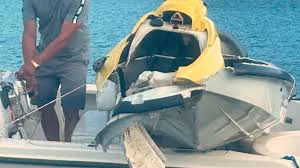
A Comprehensive Guide to Arizona Boating Laws: What You Need to Know if Involved in an Arizona Boating Accident or Jet Ski Accident
Arizona’s waterways, from the sprawling shores of Lake Havasu to the canyon-carved waters of Lake Powell, are regulated by a strict set of laws designed to ensure public safety. Arizona boating laws are primarily codified in Arizona Revised Statutes (ARS) Title 5 and enforced by the Arizona Game and Fish Department (AZGFD).
Whether you are a resident or a visitor, ignorance of these laws is no defense. This guide provides a deep dive into the legal requirements for vessel operation, safety equipment, and alcohol consumption on Arizona waters as of 2026.
1. Vessel Registration and Documentation
Before hitting the water, your vessel must be legally documented. In Arizona, all motorized watercraft (including electric trolling motors) must be registered with the AZGFD.
Registration Requirements
Numbering: Once registered, your vessel will be assigned an Arizona registration number (the "AZ number"). This number must be painted on or permanently attached to each side of the forward half of the vessel. Numbers must be in block characters, at least 3 inches high, and in a color that contrasts with the hull.
Validation Decals: You will receive two orange decals that indicate the registration is current. These must be placed within 3 inches of the AZ number on both sides.
Certificate of Number: This is your registration card. By law, the original certificate must be on board the vessel whenever it is in operation.
Exemptions: Non-motorized vessels such as kayaks, canoes, and paddleboards do not require registration unless a motor is added.
2. Safety Equipment and Life Jacket Laws
Arizona takes a proactive stance on life jackets, or Personal Flotation Devices (PFDs). The law is designed to prevent the leading cause of boating fatalities: drowning.
Wearable PFDs
Every vessel (except sailboards and certain racing shells) must carry at least one U.S. Coast Guard-approved wearable PFD for every person on board.
Serviceability: PFDs must be in "good and serviceable condition." This means no rips, rot, or compromised buoyancy.
Sizing: The PFD must be the appropriate size for the intended wearer (e.g., an adult-sized vest does not count toward a child's safety requirement).
Accessibility: PFDs must be "readily accessible," meaning they cannot be locked in a trunk or kept in their original plastic packaging during an emergency.
The 12-and-Under Rule
In Arizona, children 12 years of age and younger are required by law to wear a properly fitted, USCG-approved PFD at all times when a vessel is underway.
Throwable Devices
For vessels 16 feet or longer (excluding canoes and kayaks), you must also carry at least one Type IV USCG-approved throwable device (such as a ring buoy or seat cushion) that is immediately available for use if someone falls overboard.
3. Operating Under the Influence (OUI)
In Arizona, the laws for drinking and boating are just as strict as those for drinking and driving. The offense is known as Operating Under the Influence (OUI).
The Legal Limits (ARS § 5-395)
It is illegal to operate or be in "actual physical control" of a motorized watercraft if:
You are impaired to the "slightest degree" by liquor, drugs, or a combination.
Your Blood Alcohol Concentration (BAC) is .08% or higher within two hours of operating.
You are operating a commercial vessel with a BAC of .04% or higher.
Penalties and Enforcement
Arizona OUI laws carry heavy penalties:
First Offense: Minimum of 10 days in jail, fines exceeding $1,250, and mandatory alcohol screening and treatment.
Extreme OUI: If your BAC is .15% or higher, the jail time increases significantly (minimum 30 days).
Implied Consent: By operating on Arizona waters, you have already given "implied consent" to a BAC test. Refusing a test can lead to the immediate suspension of your boating privileges.
4. Navigation Rules and Operational Safety
Arizona follows the "Rules of the Road" established by the USCG. These rules ensure that vessels pass each other safely and avoid collisions.
Right-of-Way Hierarchy
Generally, vessels with less maneuverability have the right-of-way. The order of priority is typically:
Vessels not under command (broken down).
Vessels restricted in their ability to maneuver (dredging, etc.).
Commercial fishing vessels.
Sailing vessels (under sail only).
Power-driven vessels.
The Danger Zone
The "Danger Zone" is the area from straight ahead to your starboard (right) side. If another vessel is approaching you from this direction, you are the "give-way vessel" and must alter course or speed to stay clear.
Counter-Clockwise Traffic
On many Arizona lakes, traffic is expected to flow in a counter-clockwise direction. When leaving or approaching a shoreline, always approach from the right and leave to the left.
5. Personal Watercraft (PWC) Specific Laws
Personal Watercraft, such as Jet Skis and WaveRunners, are subject to additional regulations due to their high speed and maneuverability (ARS § 5-350).
PFD Requirement: Every person on a PWC must wear a USCG-approved PFD at all times.
Lanyard/Kill Switch: If the PWC is equipped with a lanyard-type engine cutoff switch, the operator must attach the lanyard to their person or PFD.
Proximity Rule: It is illegal to operate a PWC within 60 feet of another vessel unless both are traveling at a wakeless speed (5 mph or less).
Visibility: You may not head into the wake of another vessel within 60 feet if it causes your PWC to leave the water (wake jumping).
6. Accident Reporting and Liability
If you are involved in a boating accident, Arizona law (ARS § 5-349) dictates specific actions you must take.
Immediate Duties
Render Aid: You must stop and assist any person affected by the accident, provided it does not put your own vessel or passengers in danger.
Exchange Information: You must provide your name, address, and vessel identification to any injured person or owner of damaged property.
Mandatory Reporting Deadlines
You must submit a written Boating Accident Report to the AZGFD if:
Within 48 Hours: A person dies or is injured and requires medical treatment beyond first aid.
Within 5 Days: Total damage to the vessel or other property exceeds $500.
7. New Laws for 2026: Insurance and Rental Requirements
As of early 2026, Arizona has introduced new requirements for the rental market (House Bill 2398).
Mandatory Insurance for Rentals
Boat liveries and owners who rent out their watercraft are now required to maintain a commercial boat liability policy. The minimum coverage limits are:
$25,000 for bodily injury or death of one person.
$50,000 for bodily injury or death of two or more people.
$20,000 for property damage.
For recreational boaters, insurance is still not legally required by the state, though most lenders and marinas will require it as a condition of their contracts.
8. Environmental and Sound Regulations
Arizona protects its natural resources through strict noise and pollution controls.
Mufflers: All motorboats must be equipped with an effective muffling system. In Arizona, the noise limit is 86 decibels at a distance of 50 feet.
Aquatic Invasive Species (AIS): To prevent the spread of Quagga and Zebra mussels, boaters are required to "Clean, Drain, and Dry" their boats when moving between bodies of water. It is illegal to transport a boat with "plugs in" or water in the bilge from an infested lake.
Conclusion
Navigating Arizona’s waters is a privilege that comes with significant legal responsibility. By maintaining your vessel, carrying the required safety equipment, staying sober, and respecting navigation rules, you contribute to a safer environment for everyone.
At Water Accident Lawyers, litigating serious injury and death claims as a result of boating accidents, cruise ship accidents and jet ski accidents is all we do. We have decades of experience handling these claims and work with local co-counsel on a case-by-case basis as necessary. We are always available on short notice for a free consultation. Our results speak for themselves. Put our experience to work for you.